

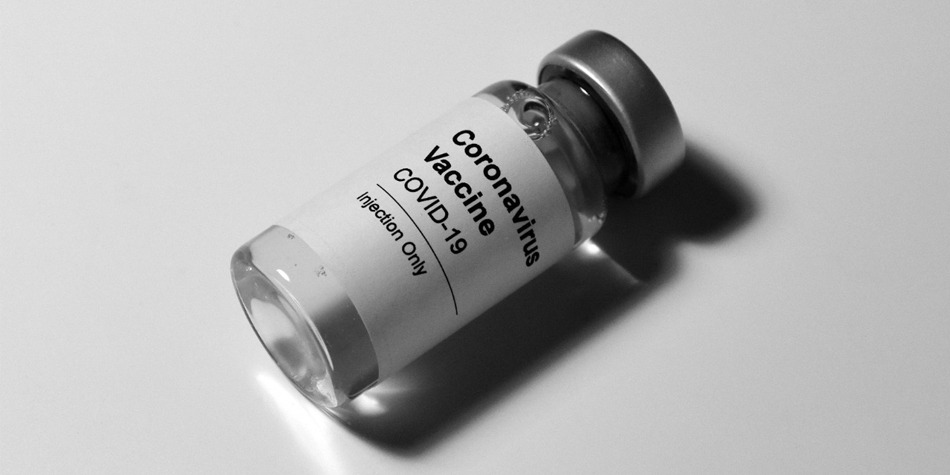
Colombia began 2021 with expectations focused on the arrival of COVID-19 vaccines in the country, their distribution throughout the national territory, and the economic reactivation that the start of immunizations could bring.
A month and a half later, on February 15, President Iván Duque announced the arrival of the first batch of vaccines: 50,000 doses supplied by the American pharmaceutical giant Pfizer, the first of a total of 10 million doses that will arrive from this laboratory. A short time later, on the afternoon of February 20, the country received a shipment of 192,000 vaccines from the Chinese pharmaceutical company Sinovac. In the first few days of last month, the national government announced this purchase: 2.5 million doses for 1,250,000 people. This month, the arrival of 2,308,000 more doses is expected.
Three months later, as of March 1st, the country reported 149,133 doses of the vaccine administered. On the same day, it celebrated the arrival of 117,000 Pfizer vaccines through Covax, becoming the first country in Latin America to receive doses through this mechanism. The arrival of AstraZeneca vaccines, acquired through this strategy, was also announced. To date, after the implementation of the first stage of Phase 1 (medical staff), the country began vaccinating the population over 80 years of age. By Sunday, March 14th, a total of 843,204 doses had been administered. The government's goal is to vaccinate two million people over 80 years of age by March 20th.
Any analysis of the vaccination plan's execution is premature. Although the country has experience administering biologics due to the implementation of the Expanded Immunization Program (PAI), this is the first time Colombia has faced the challenge of vaccinating the entire population in record time, considering that COVID-19 has already claimed the lives of more than 59,000 Colombians since the first case was reported in March 2020, although some university studies have concluded that the virus arrived in February.
Despite all that, vaccination will be a five-stage process, and as an additional ingredient, the Government aims to have 35 million people vaccinated before December 31 of this year. This challenge seems difficult to meet. On the one hand, transporting the biologicals to the most remote areas of the country, which should prioritize single-dose vaccines, is a major problem. On the other hand, it would not be strange if scandals over “sneaking” into the vaccination line, like those seen in neighboring Peru, begin to become part of the national efforts.
The start times of the National Vaccination Plan coincided with a key moment of dynamism in Colombian politics. Congress is soon to begin its third legislative session, and at the same time, the first moves for the 2022 elections have begun. With this scenario, vaccination is starting to emerge as a defining issue in the political pulse and public sphere, to such an extent that the delivery of vaccines has had its share of prominence.
Several officials from the national and local governments have taken advantage of the novelty of the arrival of the biologicals to be present and accompany the processes. Although Minister Fernando Ruíz pointed out that the intention was to educate people about vaccination, few people bought into that theory. The truth is that it is very likely that the start of immunization will help “boost” the worn-out image that several governors and politicians have.
Undoubtedly, vaccination is a political issue, permeated by criteria such as who should be vaccinated first or to which regions vaccines should be sent as they arrive. However, the process is not a banner for a political party or a ruler, but a public health issue that demands responsibility and efficiency. Apparently, the country is not prepared in this regard, and the cases of political confrontation and grandstanding are numerous.
For example, there was a political dispute in Santander over vaccine distribution between the mayor of Bucaramanga and the governor, along with some inconsistencies in the presented figures. The attacks by the mayor of Bogotá, Claudia López, against the Ministry of Health have also been a topic of discussion in recent weeks. Meanwhile, other technical matters have been neglected, such as the failed logistics behind the long lines of seniors waiting to be vaccinated in Bogotá and the variation in the cold chain of some vaccines in Tolima, which put their usability at risk. Thus, the vaccination process continues.
With a huge challenge ahead, unintentionally, President Duque found in the pandemic what would be his government's legacy. What for Uribe was Security, and for Santos, Peace, for Duque it will be the implementation of the vaccine to achieve herd immunity in the country in the shortest possible time, and simultaneously, economic reactivation.