

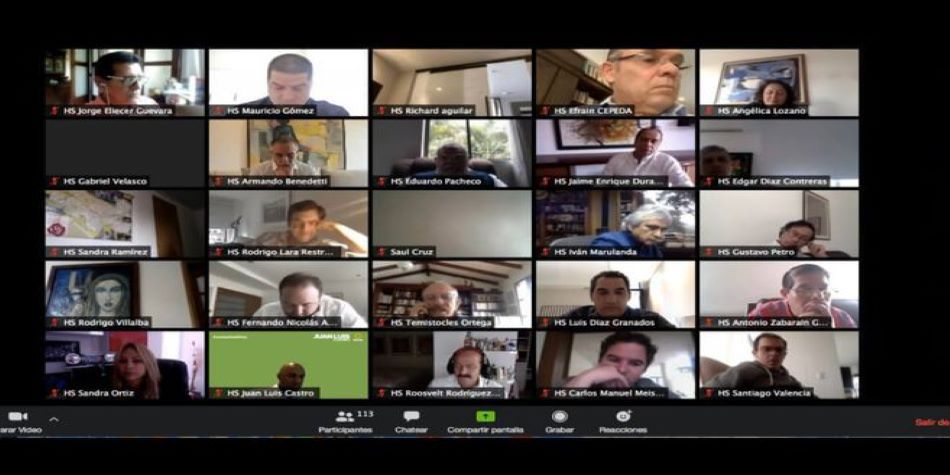
As is customary, the Orza team prepared this legislative report to mark the close of the regular legislative session of Congress on December 16, 2020. Several interesting conclusions emerge from this: the fact that the highest volume of bills was transferred from the First Committee—which handles constitutional matters—to the Seventh Committee—the legislative body that addresses labor and health issues, among others. As a result, while the first committee is responsible for 22,22% of the bills, the second must process and vote on 22,49%. This quantitative data is significant in a Congress that has had to restore its tarnished political image by legislating on the two greatest concerns of Colombians during the pandemic: employment and the healthcare system.
This report also includes a brief summary of the main topics of the legislative session so far, which ends on June 20th of this year. For example, the Tourism Law was one of the government's “workhorses” in Congress, amidst a crusade to save one of the sectors most economically affected. The new Electoral Code, despite the controversy generated by the bureaucratic expansion of the Registry, updates the electoral rules of the game in a country with deep delays in this area. Likewise, the health reform which, despite the media buzz and the government's message of urgency, did not even manage to be discussed in the first debate, and its final approval is in doubt.
This report also includes a brief summary of the main topics of the legislative session so far, which ends on June 20th of this year. For example, the Tourism Law was one of the government's “workhorses” in Congress, amidst a crusade to save one of the sectors most economically affected. The new Electoral Code, despite the controversy generated by the bureaucratic expansion of the Registry, updates the electoral rules of the game in a country with deep delays in this area. Likewise, the health reform which, despite the media buzz and the government's message of urgency, did not even manage to be discussed in the first debate, and its final approval is in doubt.
Additionally, this document offers a list of some of the congress members who have led key issues in the legislature, without the list being exhaustive. The truth is that this ordinary session period was rich in discussion topics, but normative production (the number of bills converted into law) remains low. With all that said, there are issues that have not even begun their discussion and are still important for the country, such as those related to digital platforms and lobbying regulation. Meanwhile, Congress seems to remain focused on the most pressing issues and, why not, on a new tax reform.
We invite you to read the full report Here.