

The government of President Duque has been marked by social discontent from a young class with frustrations and hopelessness. In late 2019, the country experienced one of the most active social mobilizations in recent times. A national strike called for November 21 of that year, led by left-wing forces and actively responded to by young people, turned into a protest against pension, labor, and education reforms and in favor of the peace agreement signed with the FARC, which was hanging by a thread.
The final months of 2019 and the beginning of 2020 were marked by widespread public outcry, with demands and grievances of all kinds directed at a government that had failed to earn credibility or public support. A roundtable discussion was then convened, where dialogues began; however, the majority of the 104 requests made exceeded the executive branch’s authority or were unfeasible demands, such as the release of political prisoners, withdrawing Colombia from the OECD, not proceeding with labor or pension reform, and ensuring that Ecopetrol remains 100% state-owned. After several months of protests and with society tired of the chaotic disorder of mobilization and the city's dynamics, the marches became worn out on the street, but not the society's frustration.
And so the pandemic arrived, overturning social plans, economic projections, and state policies to address one of the biggest and most unexpected challenges; COVID19. Since February, the national government began to establish prevention strategies and by March the country was in lockdown, in an attempt to keep the spread of the virus under control and to avoid the collapse of our healthcare system.
The result: a pandemic that is, relatively speaking, under control, with cases and deaths, but also with a healthcare system capable of handling the cases that arise, and one of the highest unemployment rates in the world, at 20.21% as of the end of July, according to the National Administrative Department of Statistics (DANE).
Social tension is palpable everywhere. The problems were already there, but the pandemic has exacerbated them, and the solutions—or potential solutions—that emerged from the 2019 protests have been put on hold due to the new coronavirus. Today, 30% of Colombia’s young people are unemployed, and from a social perspective, unemployment also poses a public health problem.
But it's not just COVID-19 that has become a major national problem, with tentacles reaching out to affect the country's other economic sectors and assets. A recent report published by the Institute for Peace and Development Studies It shows that so far this year, as of September 15, 57 massacres have been registered in Colombia, with a death toll of 230 people; the majority being young people and social leaders. Everything appears to be related to drug trafficking and actions led by dissident FARC groups and demobilized paramilitaries.
Added to this unstable social context that rests upon Colombia, with young people as protagonists leading demands that have erupted in violent demonstrations, is the discourse of local leaders and political figures who, far from achieving consensus on decisions in favor of the collective good, expose their differences to public ridicule and the void in which Colombia navigates in its search for leadership and clear, decisive management leading to solutions.
Claudia López, the mayor of Bogotá, and Gustavo Petro, a senator, are two of the voices most heard in the context of social rebellions that, far from needing approval, warrant clear orders for sanity and consensus. Incitement to hatred, violence, and defiance—wherever it comes from—will always be a trigger in a country that is wavering in providing concrete solutions and a society that doesn't truly know what to demand.
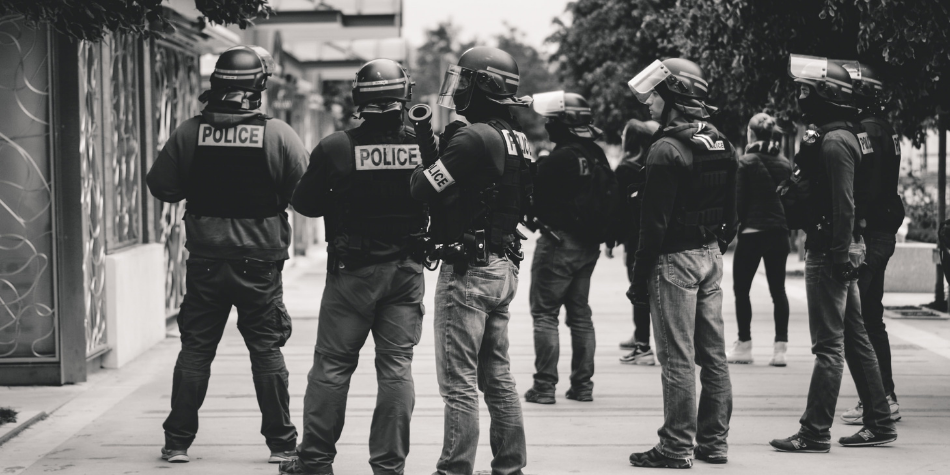
In this scenario and amid the wear and tear of quarantine, the abuse of power and authority by the police against citizens had the unfortunate outcome of the murder of a law student in Bogotá. This sparked 48 hours of protests marked by violence, resulting in 13 deaths and 60 citizens injured, as an outlet for that frustration. It seemed like a battle between protesters and police brutality, creating a deep rift between the institution and the citizenry. Today, the debate centers on the need to reform the Police, to verify the training model of the police force, the mechanisms used to admit human capital into the ranks, and of course, to increase the police presence in cities where citizen safety is crumbling with the economic crisis and where dissidents and criminal gangs are beginning to gain ground.